Posts

Showing posts with the label Polish

♂♂ oni ich nich im nim nimi ♂♀

♂♂ They / Them ♂♀ nominative oni genitive ich / nich dative im / nim accusative ich / nich instrumental nimi locative nich Gen Ona  ich  potrzebuje               To  ich  samochód                Nie lubię  ich  brata              To  dla   nich Dative Daj  im  torbę                       Powiedziała  im                   Dzięki  nim Kupuje im  piwo                Życzę  im ... Zapłaciła  im Accusative Ona  ich  lubi                Idż po  nich Ona  ich  widziała         Kula przeszła przez  nich Instrument...

Poznańskie Muzeum Pyry - The Poznań Spud Museum

Image
After booking a visit to The Poznań Potato Museum I found the tour was not available in English*, so I would need to translate as best I can for my family.  Which, considering I struggle to understand spoken Polish at normal speed, will probably result in me making it up as I go along.  But: best foot forward; I shall do my best. (*The reply from the museum said the tour was mainly in Polish, which is fair enough considering the Museum is situated in Poland) A bit of advance preparation is needed, so I will note some spud related vocabulary here.  I first learned that Ziemniak is the word for potato, but just as we have spuds, tatties, and taters, the Polish have other words for potato.  There is the Germanic word kartofel , but in the Poznań area the dialect word pyra is used, pyry being the plural, but also the genitive singular. What other vocabulary may crop up? uprawa / uprawy     -     crop / crops uprawiać     -   ...

adjectives following conjugations of być

Something I need to remember is that although you use the instrumental case following conjugations of być.  This only applies to adjectives if they describe a noun following conjugations of być.  To illustrate: He is a man     -     On jest mężczyzną the noun mężczyzna,  because it follows jest,  takes the instrumental form:  mężczyzn ą. If we add an adjective, its case must be the same as the noun, so he is a happy man    -    on jest szczęśliwym mężczyzną      [instrumental] he is a happy guy     -     on jest szczęśliwym facetem     [instrumental] However, if we do not have a noun after conjugations of być and just use an adjective, then the adjective stays in the nominative case. he is happy     -    on jest szczęśliwy [masculine nominative] Not forgetting to get the gender correct. she is happy     -    ona jest szczęśliwa [feminine ...

Recognising adjectives formed from nouns

Masculine nominative forms of adjectives often, but not always, end with the suffix -owy after the noun. See the following examples analogowy     -     analog cyfrowy     -     digital czekoladowy     -     chocolate czosnkowy     -    czosn e k     -     garlic domowy     -     domestic filmowy     -     film / movie internetowy     -     internet kawowy     -     coffee napędowy     -     propulsive / drive (eg: wał napędowy) ogrodowy     -     garden plenerowy     -     open air / outdoor pociągowy     -     rail / train pomarańczowy     -    pomarańcz a    -    orange samochodowy     -     car spacerowy     -     strolling (less common than pieszy) ...

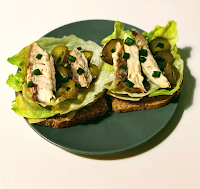
Sandwich from mosquitoes

Image
A sandwich (kanapka) in Poland, tends to be an open sandwich; toppings sitting on a slice of bread, like a large canapé. In fact the word kanapka is the diminutive form of kanapa (sofa) which itself comes from the French word, canapé, for sofa. Its resemblance to the word canopy is no mere coincidence. A mosquito net over a bed was called a canopy from the Ancient Greek word, konops, for mosquito. Over time the word for the canopy over the bed, came to be used for the bed itself, then finally came to mean sofa. So the toppings of canapés and kanapki sit on little beds of bread.  I first heard the etymology of canapé from Something Rhymes with Purple , a splendid podcast by Susie Dent and Gyles Brandreth. 

Christmas Stuffing

Image
It's Christmas!  A time for the English to stuff their turkeys and for the Polish to stuff their pierogi.  The Polish word for stuffing is farsz. Which is very similar to the English farce , or force -meat, all having the same etymological path, from the old French, farcir, and before that the Latin, farcīre .  Currently in English, we tend to use stuffing rather than farce or force, and if we say farce, we generally mean something ridiculous or comical.  The origin of this use stems from comic sections being stuffed into a play or performance. Some differences, some similarities, but I bet most Brits and most Poles will be stuffing their faces this Christmas. Merry Christmas! Wesołych Świąt!

Did you just assume my gender?

Image
It would seem that there's no avoiding this. Words are masculine, feminine or neuter and adjectives describing them will need to agree with the gender of the noun. This bit I do remember, but I often make the biggest faux pas when in hurry and resorting to Google Translate . It seems that the app, unless you ensure the gender of the person is obvious, will default to assuming they are male.  So, I have often been corrected and reminded that my correspondent is a member of the fairer sex.  This gaff generally occurs with verbs outside the present tense. Using the first person (I) and the second person (you) in the present tense, the verb endings seem to be the same for male and female. In the past tenses, they differ.  For example: być, to be.  I am - jestem (both genders) You are - jesteś (both genders) I was - byłem (masc) byłam (fem) You were - byłeś (masc) byłaś (fem) On the subject of using Google Translate: When translating you , as well as assuming male by def...

Nail Polish

Image
I'm starting this blog as a place to keep notes along my journey with the Polish language.  It's really just for me in a bid to help me nail Polish.  If it eventually helps or interests others, then that would be splendid.  I would welcome helpful comments and thoughts if I have misunderstood anything. This is not a learning course for beginners.  I am learning Polish and making notes along the way as I learn things, so it is quite literally as I understand it. If you want to learn Polish, find a patient and helpful Polish friend, use an app like Duolingo , follow bloggers and teachers like the ones listed below, buy a book like Polish for Dummies, watch Polish films and TV, listen to Polish music, and make lots of notes to enable you to get your head around the grammar of this heavily inflected language.  Best of luck! Update: Links to more places and people who have taught me a great deal: Polish teacher, Aleksandra,  Being Ponglish website and on I...